Feel your Breath

We have become so used to holding it all in and keeping it all together that we have forgotten how to just be. Because of this our bodies have found a new “normal” way of functioning.

Have you ever thought about how your breath feels?

If you had to stop what you are doing right now and take a deep breath, how would it feel? Put one hand on your chest and one hand on your belly and feel where your breath goes?

Ideally, we should see and feel more movement in our belly than in our chest with every breath in. We should be breathing with our diaphragm and when our diaphragm moves we should see and feel movement in our belly and lower ribs.

Now try this… Still with one hand on your chest and one hand on your belly.

Breathe in belly rise
Breathe out belly fall

Focus only on your breath as it moves down into your body and out again. Practice it a couple of times to get the feeling and the rhythm.

If we re-patterned our breathing into this rhythm it would have such a positive effect on our body. By encouraging the natural movement of our breath we make space for digestion and give the pelvic floor the space it needs to be free. Even our posture will change when we give our tummy permission to move with each breath.
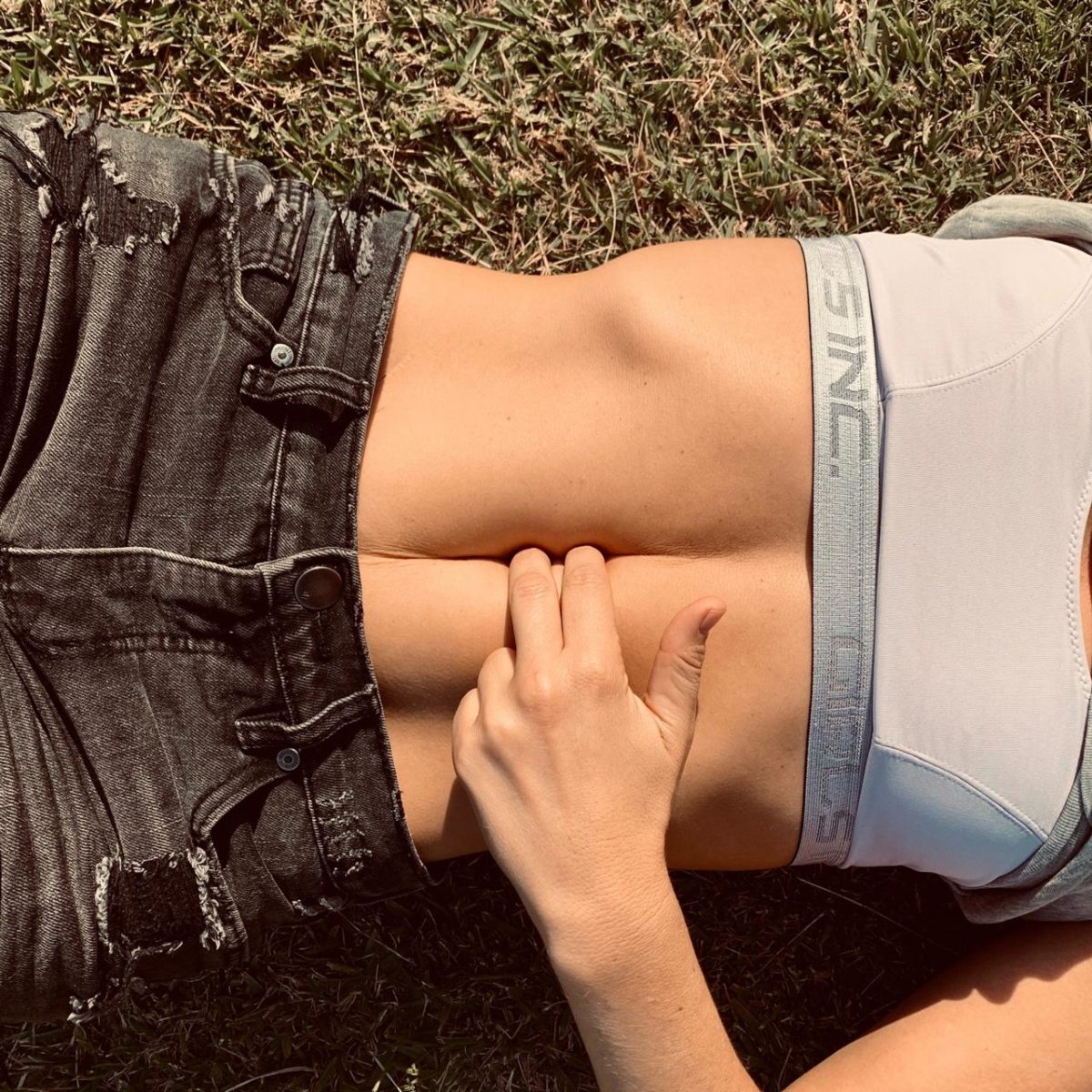
Breath is power to the body.

What does the mind-body connection have to do with Pelvic Health?

The quick answer to that question is EVERYTHING!

The more I work with ladies the more convinced I become that the pelvic floor is an emotional muscle.

As ladies we can easily understand that stress manifests itself in our bodies; just think of headaches and a sore neck and shoulders. So why not in the pelvic floor? The pelvic floor is made up of a group of muscles and is just as susceptible to stress as other muscles. Our body’s response to fear and anxiety is to go into the fight or flight state where our muscles are poised and tense ready for action.

Once ladies have a better awareness of their pelvic floor they are then able to feel if and when they are holding extra tension down there during times of stress. If you are a lady who already struggles with an overactive pelvic floor then this is something you need to be aware of.

Watching your child do something dangerous, watching a scary movie, hearing some hard news, and sitting through traffic may all have an impact on your pelvic floor and cause you to tense.

But there is hope, and that hope starts with our breath.

As soon as we become aware of our breath and how we are breathing; and ensure that we breathe all the way into our diaphragm we start to bring our mind and body out of that space of stress!

We can’t always control our feelings or the situation we are in, but we can control our breath which in turn controls the effect of the stress on our bodies and mind.

How is your breathing? Are you a shallow breather who uses her shoulders and chest? Are you able to breathe deeply? I would love for you to respond on my Instagram post.

Keep a look-out for my follow-up posts as I share more about the mind-breath-body connection and what it means for you.

Meet my Diastasis

What is a Diastasis?

A Diastasis (also known as a Rectus Abdominus Diastasis- RAD, or Diastasis Rectus Abdominus- DRA) is when there is a separation between the front most muscles of the tummy. This separation is most commonly seen in the last trimester of pregnant moms and in the postpartum period.

This separation looks different in different people. Sometimes you can visibly see it when a person is standing up or lying down. Sometimes you can only see it when the abdominal muscles are being used. It could look like a dome or it could look like a gap. The width also ranges from person to person and so can the depth.

We used to think that the width of the Diastasis was the most important feature but with more research, we have realized that the depth of the Diastasis is what is important.

Why do we need to pay attention to a diastasis?

We always do a Diastasis check with our postpartum moms as most women will have one after being pregnant. When we check the Diastasis, our goal is to see how well controlled the tension beneath the gap is. This gives us insight into the core control of the body.

A Diastasis that is not well controlled can cause backache, a poorly functioning pelvic floor, and pelvic instability. Rehab for a Diastasis is a great way to look after your new postpartum body.

An example of what Diastasis can look like.

Below is a video of my Diastasis. My Diastasis is 1 finger wide. In the first section of the video I do a curl up of my head and shoulders (with poor core control) and you can see my fingers dipping into my Diastasis. Then when I activate my core (my TA and my pelvic floor) you can see my fingers pop up as my diastasis closes.

A pelvic health or women’s health physio is the right person to help you.

If you have any concerns about your diastasis or would just like to get it checked I strongly urge you to get in touch with a pelvic health or women’s health physio. There is so much that can be done to help you move and feel better and stronger.

The “Giggle Test”

The giggle test is a quick and easy test that we do during our assessments to see how the core muscles are firing together. It shows us how the body is dealing with any pressure changes inside the abdomen and pelvis.

Ideally, when there is an increase in pressure (such as with a laugh, cough or sneeze), we want the core muscles to switch on in such a way that the pressure is controlled and doesn’t overwhelm our pelvic floor muscles resulting in leaks.

This is how you can do the test

Step 1: Remove clothing from lower abdomen/ pelvic area so that you can see the tummy move

Step 2: Do a fake laugh

Step 3: Observe how your lower belly moves; does it move in when you laugh or does it move out?

A positive giggle test is when your tummy moves out and this indicates that your core is not firing optimally.

But no need to stress or freak out. Knowledge is power! If you do have a positive giggle test it just means to need to spend some time on your core.

Here is a video of me doing the giggle test

Its not perfect because I still have work to do on letting go of holding my tummy in; but you get the general idea.

Take some time this weekend to do the giggle test on yourself and get an idea of how your core is working.

Hello Mom: Connecting Postpartum Moms back to their Bodies.

I have such happy news to post! @luluphysio and I are so excited to share our new offering for postpartum ladies.

Introducing the “hello mom” assessment 🙌🏻 Hello mom is a safe space that we have created for any mom that has ever had a baby to reconnect to their postpartum body.
As a postpartum mom the only routine care that you receive is a checkup with your gynae or midwife at 6 weeks to give you a Pap smear and the all clear for sex and exercise.
Yet after having a baby your body will never be the same. Things have changed that you probably have never even considered. A hello mom check takes you through all the ways your body has changed and adapted to pregnancy and birth and helps you navigate your journey towards healing and wholeness.

To help us on our mission to give moms the help they need we have put together a 3 part webinar to help postpartum moms better understand their new bodies and to start them on the road to recovery.

Session 1: Get connected to your pelvic floor
Session 2: Embracing your “mummy tummy”
Session 3: Enjoying sex and exercise

We will be sharing dates and sign up information about the webinars in the next few days. If you are a postpartum mom, we would love for you to join us 💕.