Mommy you need a time out… said no person ever!

I know it’s because of the crazy world that we are living in (pandemic combined with post civil unrest) but I feel totally overstimulated by the end of the day. All the snacks, the meals, the questions, the games, the cleaning, the caring… the list goes on.

All I want to do is curl up in a ball and sleep! Eat all the chocolate and then sleep! My system is screaming at me that I am internalizing my stress and I cannot keep it up!

Just because we can keep calm, it doesn’t mean that our body is not feeling and responding to the stress.

Why as ladies (I’m totally generalizing and would be happy to be wrong), but why is taking time out for ourselves so hard? Why do we struggle to ask for help? For a break? For a rest? I often tell my husband he needs to remind me I need a timeout when I’m on the edge. But he says that I need to get better at taking the time I need. I get what he is saying BUT… I think I would feel less guilty if I was told to have a timeout 🤣 how crazy is that!?!

Asking for a timeout is not in my nature.

But the stress plays itself out in my body. I start clenching tighter in my body. My constipation flares up. My feet hurt. My brain gets foggy. And I cannot make decisions!!!! Decision fatigue becomes a real thing!

As the world around me calms down, I can tell my body and mind need a timeout. My mom-ing and wife-ing and life-ing would greatly benefit from a timeout.

Physically and mentally we cannot keep “going” all the time!

Our nervous system wasn’t designed to constantly be on the going. I’m hoping that in the next few days we all find some time and space to breathe and rest, to de-clutter our minds. A slow yoga class or a walk on the beach. A lie-in in the morning, followed by coffee in bed (without the kids).

Moms need timeouts too. I won’t judge you for taking one, in fact, I will cheer you on!

Go get some rest mama!

Feel your Breath

We have become so used to holding it all in and keeping it all together that we have forgotten how to just be. Because of this our bodies have found a new “normal” way of functioning.

Have you ever thought about how your breath feels?

If you had to stop what you are doing right now and take a deep breath, how would it feel? Put one hand on your chest and one hand on your belly and feel where your breath goes?

Ideally, we should see and feel more movement in our belly than in our chest with every breath in. We should be breathing with our diaphragm and when our diaphragm moves we should see and feel movement in our belly and lower ribs.

Now try this… Still with one hand on your chest and one hand on your belly.

Breathe in belly rise
Breathe out belly fall

Focus only on your breath as it moves down into your body and out again. Practice it a couple of times to get the feeling and the rhythm.

If we re-patterned our breathing into this rhythm it would have such a positive effect on our body. By encouraging the natural movement of our breath we make space for digestion and give the pelvic floor the space it needs to be free. Even our posture will change when we give our tummy permission to move with each breath.

Breath is power to the body.

What does the mind-body connection have to do with Pelvic Health?

The quick answer to that question is EVERYTHING!

The more I work with ladies the more convinced I become that the pelvic floor is an emotional muscle.

As ladies we can easily understand that stress manifests itself in our bodies; just think of headaches and a sore neck and shoulders. So why not in the pelvic floor? The pelvic floor is made up of a group of muscles and is just as susceptible to stress as other muscles. Our body’s response to fear and anxiety is to go into the fight or flight state where our muscles are poised and tense ready for action.

Once ladies have a better awareness of their pelvic floor they are then able to feel if and when they are holding extra tension down there during times of stress. If you are a lady who already struggles with an overactive pelvic floor then this is something you need to be aware of.

Watching your child do something dangerous, watching a scary movie, hearing some hard news, and sitting through traffic may all have an impact on your pelvic floor and cause you to tense.

But there is hope, and that hope starts with our breath.

As soon as we become aware of our breath and how we are breathing; and ensure that we breathe all the way into our diaphragm we start to bring our mind and body out of that space of stress!

We can’t always control our feelings or the situation we are in, but we can control our breath which in turn controls the effect of the stress on our bodies and mind.

How is your breathing? Are you a shallow breather who uses her shoulders and chest? Are you able to breathe deeply? I would love for you to respond on my Instagram post.

Keep a look-out for my follow-up posts as I share more about the mind-breath-body connection and what it means for you.

Learning to let it go

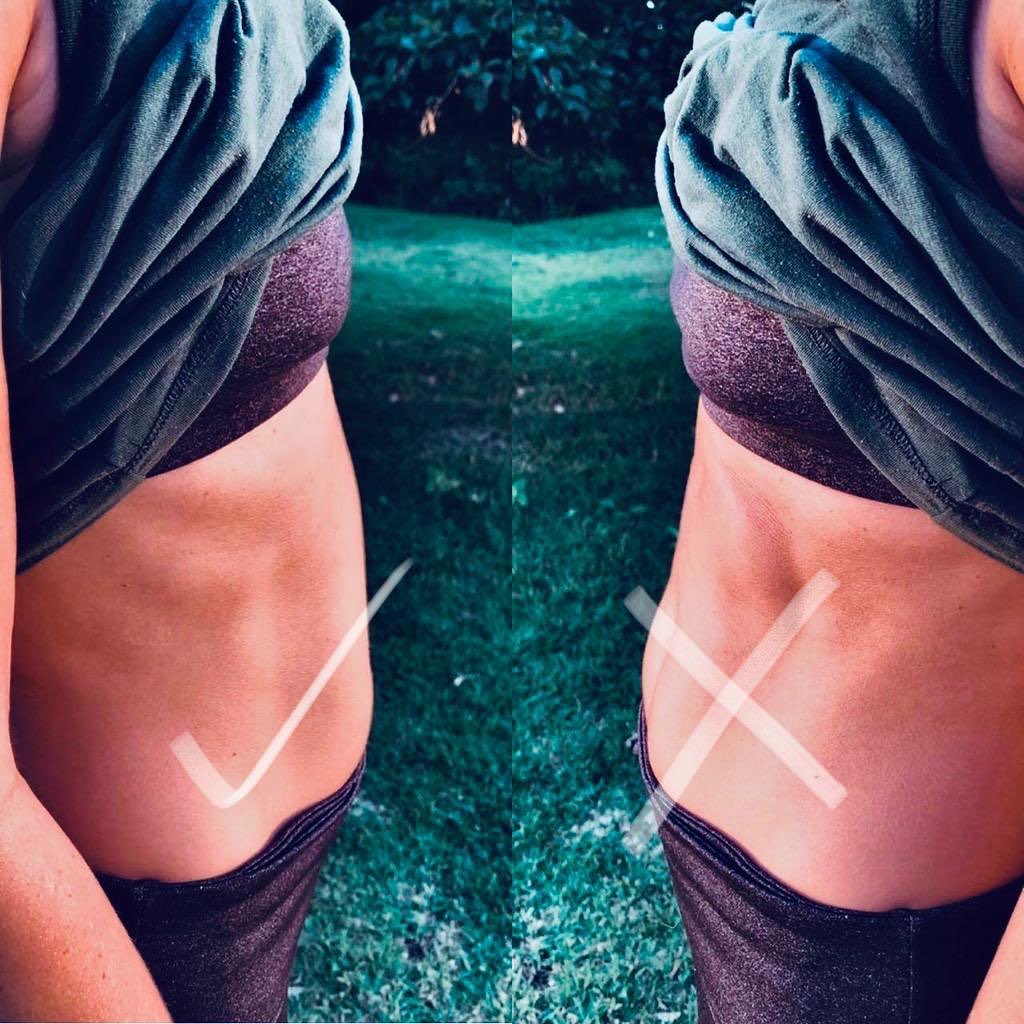
I have spent the majority of my life holding my belly in. I thought that I had to. I thought that it made me look better. I thought that it meant I was strong. If only I had known earlier that none of those were true.

I have since spent the last year teaching myself to let go. It has been tough! Stress and habit often cause me to tighten up. Then I remind myself to take a deep breath, to relax, to let go.

But what is so wrong with constantly pulling in your tummy? For starters it is unnatural. It’s not how our abdominal muscles were made to function. It restricts our diaphragm, which means we are not getting the right breath and oxygen to our bodies. It changes our posture, causing our pelvis to tilt and our shoulders to round forward.

Most significantly for me I found that whenever I pulled in my tummy, I would tighten my pelvic floor unnecessarily! And with an overactive pelvic floor comes pain and dysfunction. For me that translates to constipation and hip/SIJ pain.

Now whenever I see a pelvic pain patient, or someone battling constipation I always start by checking for abdominal bracing. Those overactive tummy muscles are big contributors to pain in the pelvis, hip and low back area.

How are your tummy muscles? Do you carry tension in them? Are you able to let them go?

We all need a little “win” now & then

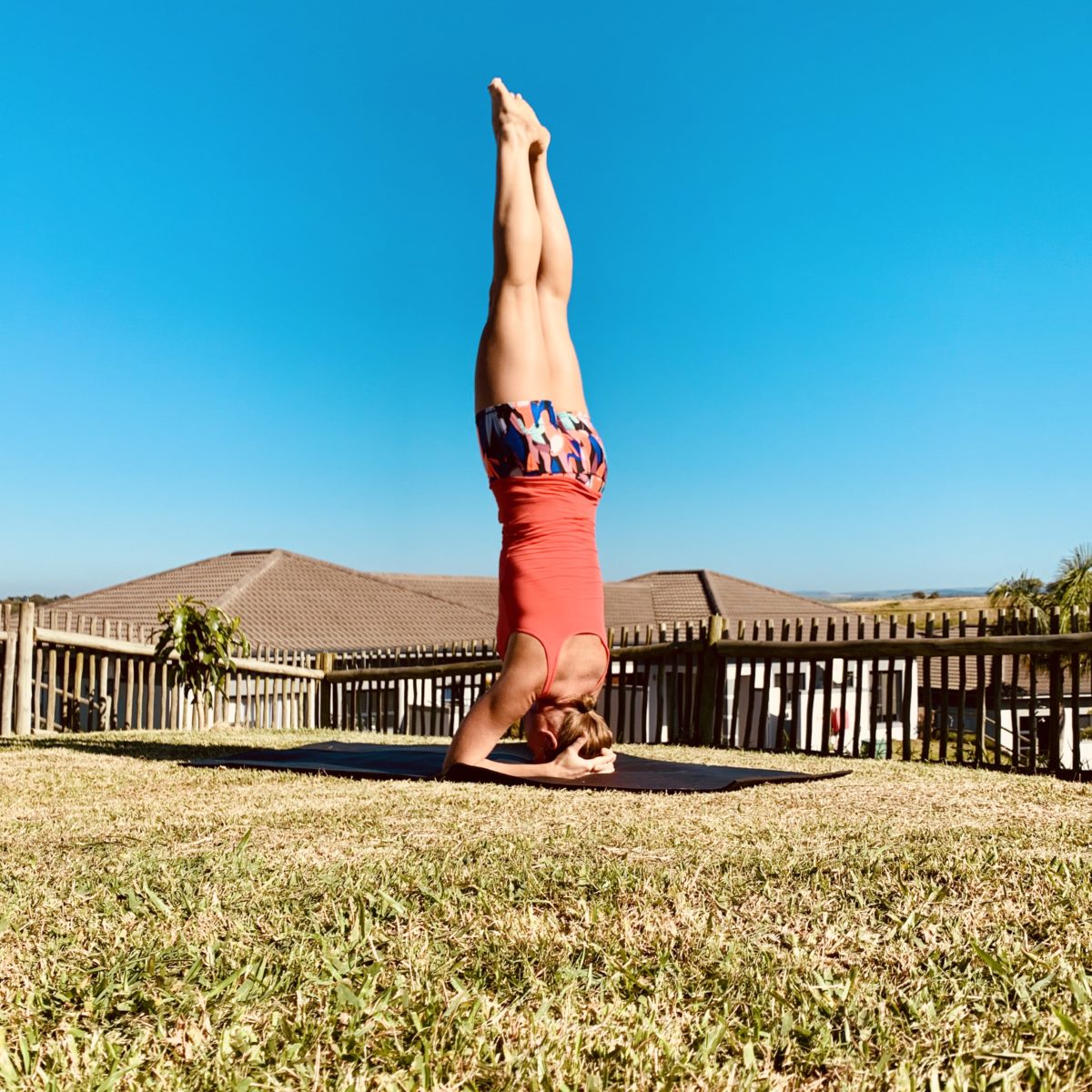
I have always wanted to do a headstand. So each day in lockdown I started to do a little something which would help me get there. Shoulder strength, core strength, stretching and balance and even some mind work. I had get myself to the point where my fear of succeeding was greater than my fear of falling.

I fell many times. I am now an expert at “tucking and rolling.” But each time I could feel I was getting closer and that made me continue. Then one day it all came together and I was up! Pure happiness!

The next day however I couldn’t get up again so had to backtrack and work on the build up again. I tried not to get frustrated because I knew that my goal was still within reach.

This reminded me so much of my patients journeys. Often with chronic pelvic pain the journey is long. In order to get to the end (and keep us motivated) we need to set up small goals that we can “win” along the way to help us get there.

There is nothing like the feeling of winning to keep our head in the game. So I challenge you to pick something you want to achieve and then go for it. Set mini goals along the way so that you can stay motivated and invested. And then share your stories with me 😀