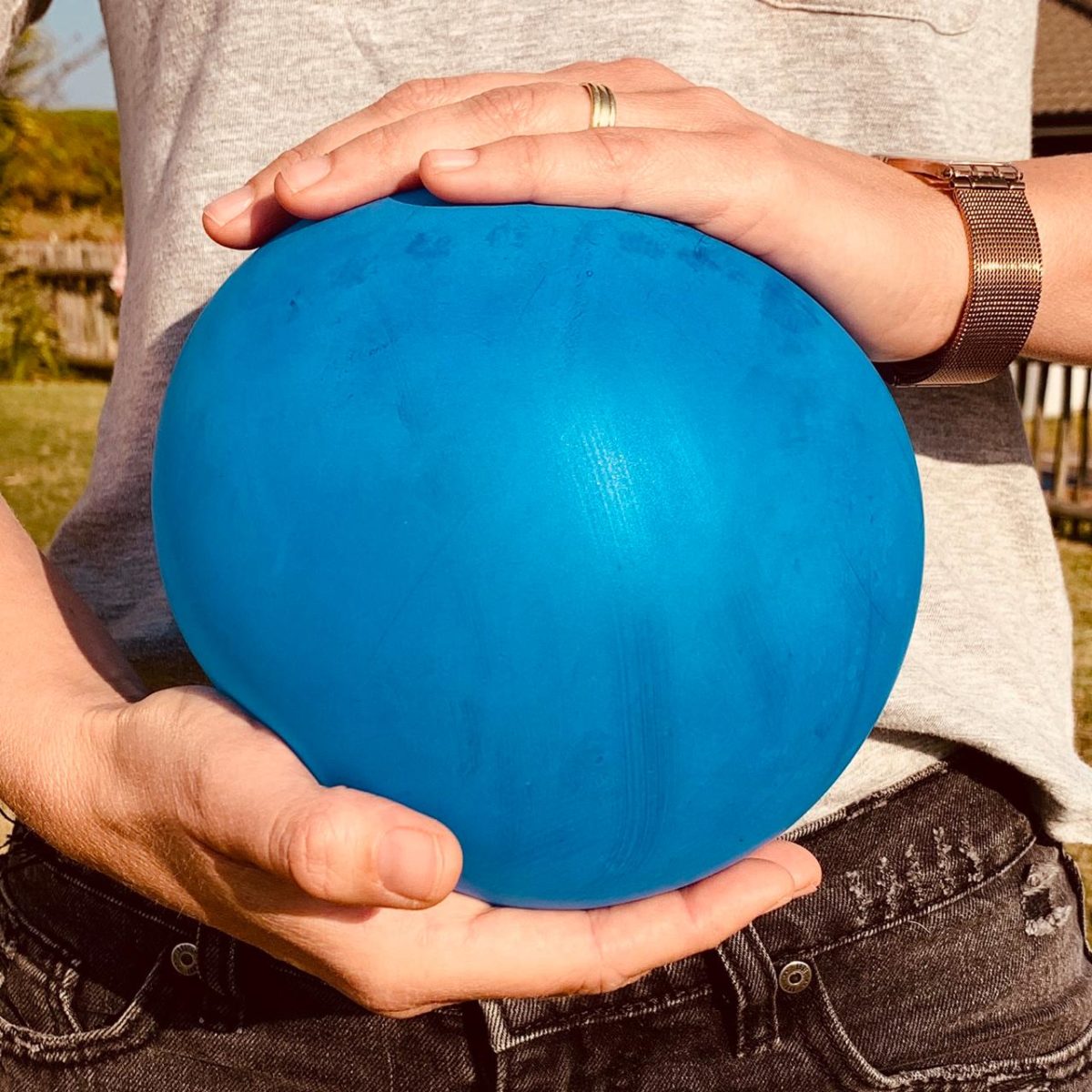
In the podcast that I did recently with @caitlyndebeer and @theunpodcast, we spoke about our core and a little bit about the relationship between our tummy muscles and our pelvic floor. I thought that a picture and video would help to show you what I was talking about.
Our pelvic floor is an integral part of our core.
Our core is made up of many different muscles; to put it simply these are our diaphragm, some abdominal muscles, some back muscles, and pelvic floor.
But what happens when we are constantly pulling in our tummy muscles from tension or to look more “together”? If we think of our core as a balloon, this would look like us squeezing the balloon from the top. The extra pressure at the top causes an increase in pressure at the bottom.
Have a look at how the balloon bulges downwards due to the extra pressure from the top. Our core responds to this new pressure at the bottom by increasing the engagement of our pelvic floor in order to control that pressure.
Our pelvic floor is affected by changes in pressure within our core.
When we let go of the balloon the pressure distribution goes back to normal. Using this analogy makes it easier to understand why we need to consider what is happening with our upper tummy muscles when working with the pelvic floor.
How are you “holding” your core? Do you carry extra tension across your tummy that you don’t need? When you are stressed how does your tummy movement change?
What does this mean for you?
If you found that when you stopped to take a look at your tummy you can see some extra tension, then start with seeing if you can let that tension go. Then move on to your breath and feel and assess its movement. You can read my previous posts for more info on how to go about feeling your breath.
