Mommy you need a time out… said no person ever!

I know it’s because of the crazy world that we are living in (pandemic combined with post civil unrest) but I feel totally overstimulated by the end of the day. All the snacks, the meals, the questions, the games, the cleaning, the caring… the list goes on.

All I want to do is curl up in a ball and sleep! Eat all the chocolate and then sleep! My system is screaming at me that I am internalizing my stress and I cannot keep it up!

Just because we can keep calm, it doesn’t mean that our body is not feeling and responding to the stress.

Why as ladies (I’m totally generalizing and would be happy to be wrong), but why is taking time out for ourselves so hard? Why do we struggle to ask for help? For a break? For a rest? I often tell my husband he needs to remind me I need a timeout when I’m on the edge. But he says that I need to get better at taking the time I need. I get what he is saying BUT… I think I would feel less guilty if I was told to have a timeout 🤣 how crazy is that!?!

Asking for a timeout is not in my nature.

But the stress plays itself out in my body. I start clenching tighter in my body. My constipation flares up. My feet hurt. My brain gets foggy. And I cannot make decisions!!!! Decision fatigue becomes a real thing!

As the world around me calms down, I can tell my body and mind need a timeout. My mom-ing and wife-ing and life-ing would greatly benefit from a timeout.

Physically and mentally we cannot keep “going” all the time!

Our nervous system wasn’t designed to constantly be on the going. I’m hoping that in the next few days we all find some time and space to breathe and rest, to de-clutter our minds. A slow yoga class or a walk on the beach. A lie-in in the morning, followed by coffee in bed (without the kids).

Moms need timeouts too. I won’t judge you for taking one, in fact, I will cheer you on!
Go get some rest mama!

How does our pelvic floor respond to increased pressure from above?

In the podcast that I did recently with @caitlyndebeer and @theunpodcast, we spoke about our core and a little bit about the relationship between our tummy muscles and our pelvic floor. I thought that a picture and video would help to show you what I was talking about.

Our pelvic floor is an integral part of our core.

Our core is made up of many different muscles; to put it simply these are our diaphragm, some abdominal muscles, some back muscles, and pelvic floor.

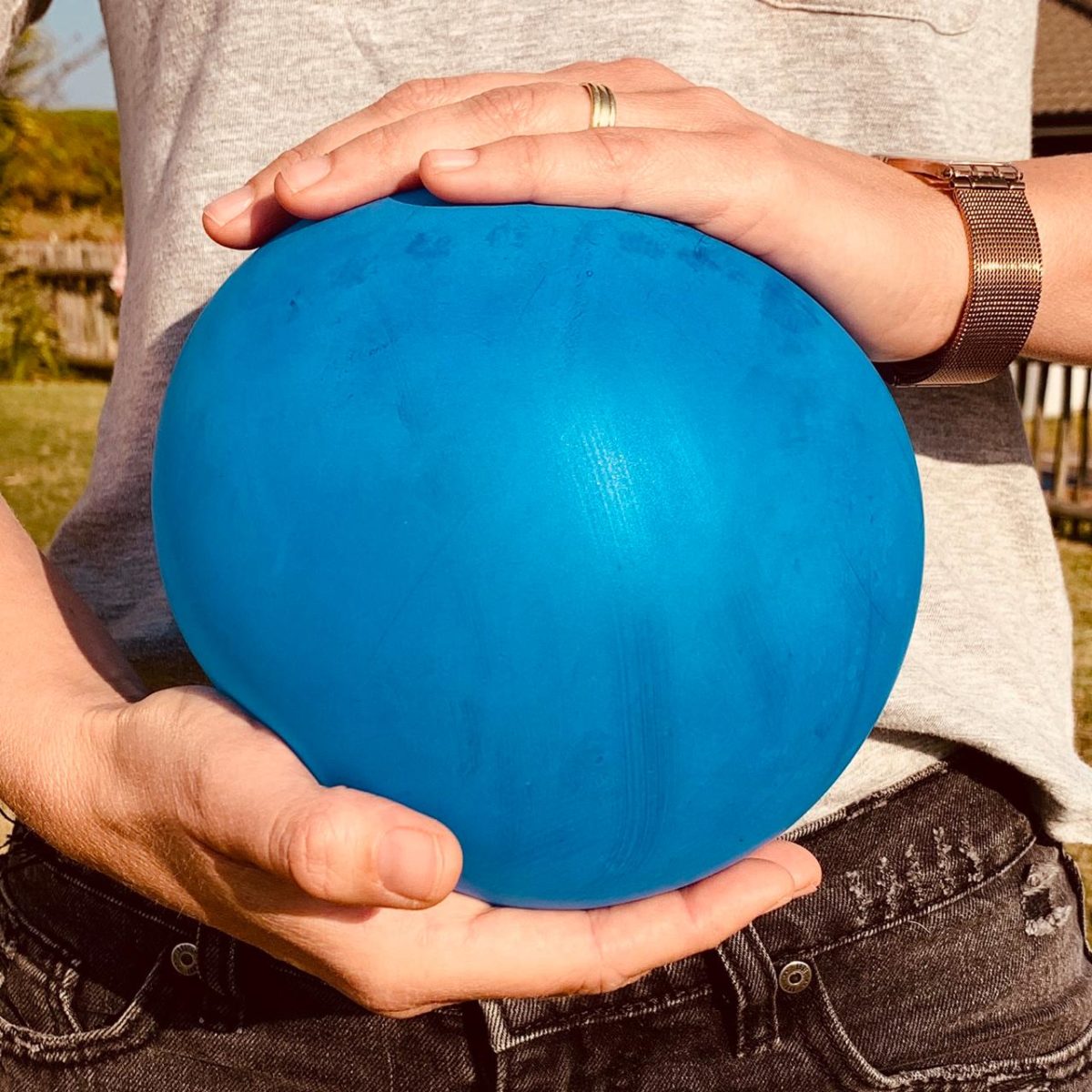
But what happens when we are constantly pulling in our tummy muscles from tension or to look more “together”? If we think of our core as a balloon, this would look like us squeezing the balloon from the top. The extra pressure at the top causes an increase in pressure at the bottom.

Have a look at how the balloon bulges downwards due to the extra pressure from the top. Our core responds to this new pressure at the bottom by increasing the engagement of our pelvic floor in order to control that pressure.

Our pelvic floor is affected by changes in pressure within our core.

When we let go of the balloon the pressure distribution goes back to normal. Using this analogy makes it easier to understand why we need to consider what is happening with our upper tummy muscles when working with the pelvic floor.

How are you “holding” your core? Do you carry extra tension across your tummy that you don’t need? When you are stressed how does your tummy movement change?

What does this mean for you?

If you found that when you stopped to take a look at your tummy you can see some extra tension, then start with seeing if you can let that tension go. Then move on to your breath and feel and assess its movement. You can read my previous posts for more info on how to go about feeling your breath.

Feel your Breath

We have become so used to holding it all in and keeping it all together that we have forgotten how to just be. Because of this our bodies have found a new “normal” way of functioning.

Have you ever thought about how your breath feels?

If you had to stop what you are doing right now and take a deep breath, how would it feel? Put one hand on your chest and one hand on your belly and feel where your breath goes?

Ideally, we should see and feel more movement in our belly than in our chest with every breath in. We should be breathing with our diaphragm and when our diaphragm moves we should see and feel movement in our belly and lower ribs.

Now try this… Still with one hand on your chest and one hand on your belly.

Breathe in belly rise
Breathe out belly fall

Focus only on your breath as it moves down into your body and out again. Practice it a couple of times to get the feeling and the rhythm.

If we re-patterned our breathing into this rhythm it would have such a positive effect on our body. By encouraging the natural movement of our breath we make space for digestion and give the pelvic floor the space it needs to be free. Even our posture will change when we give our tummy permission to move with each breath.

Breath is power to the body.